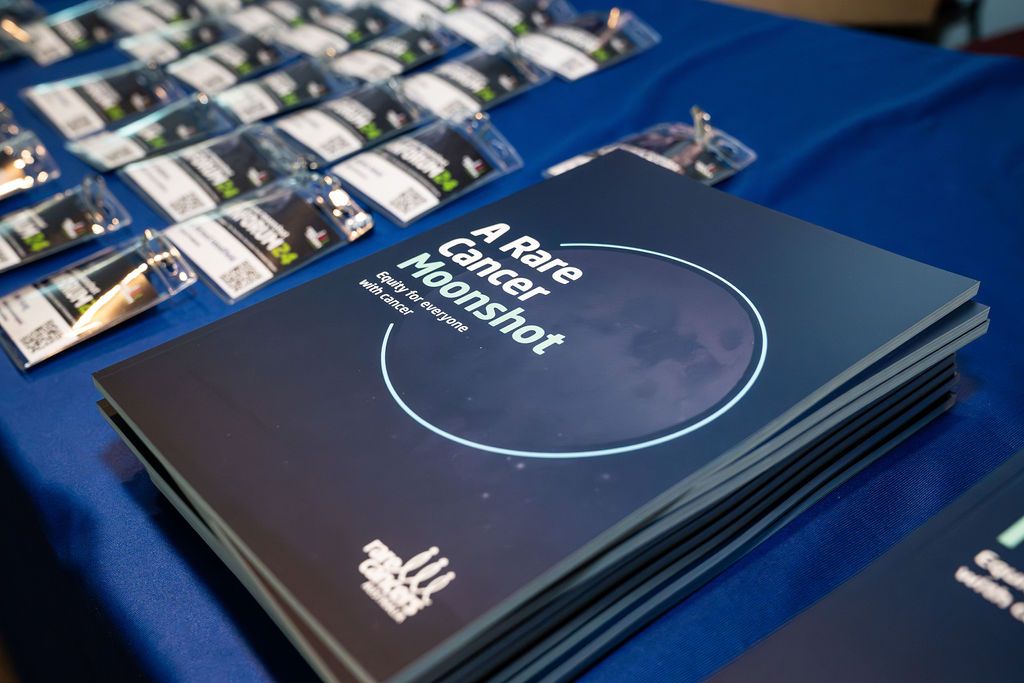
‘Equity for everyone with cancer.’ This is the goal for Rare Cancers Australia and their CEO Christine Cockburn.
At their recent CanForum event in Parliament House, Rare Cancers Australia unveiled their Rare Cancers Moonshot, a call that within the next decade, government, health care providers, industry, researchers, and the community come together to meet two key goals:
“Like landing a person on the moon, this Moonshot is ambitious and ground-breaking,” said Cockburn. “It will have significant impact on people living with cancer and their families, not to mention future patients – together we will create a better world for rare.”
Rare cancers are those with incidence rates of less than 6 cases per 100,000 people. While rare and less common cancers are estimated to collectively account for 24% of cases, they are estimated to account for 33% of all cancer deaths in 2024.
“For us to make real progress, it’s important that governments, industry, and patient communities collaborate in new and effective ways. Fortunately, we have the tools, determination, and leadership to make this happen.”
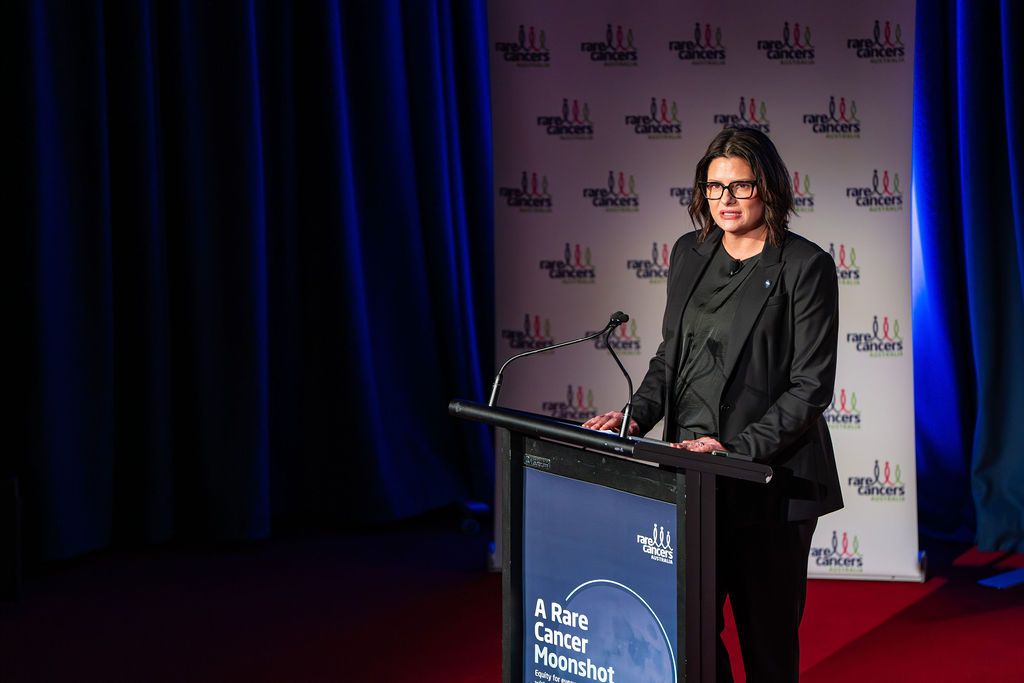
Rare Cancers Australia CEO Christine Cockburn addressing CanForum 2024
“The Australian Cancer Plan gives us a solid foundation for achieving equity. However, to see meaningful improvements, especially for cancers with poor prognoses, and ensure that everyone reaches the 90% survival rate, we need to focus more on investment and attention across all cancer types.”
Professor Georgina Long, the Co-Medical Director of Melanoma Institute Australia (MIA) added at CanForum: “we need to get practical and create a framework that puts rare cancers on the map, so that research and medical work can begin to make a difference. And that’s what’s important in cancer – making a difference.”
CanForum saw both Health Minister Mark Butler and Shadow Health Minister Anne Ruston address the Moonshot, endorsing the call.
Equity was a common theme in both of their addresses, with the pair reflecting on Australia’s strong cancer outcomes and where we can do better, including closing the survival gap for priority populations including Aboriginal and Torres Strait Islander peoples.
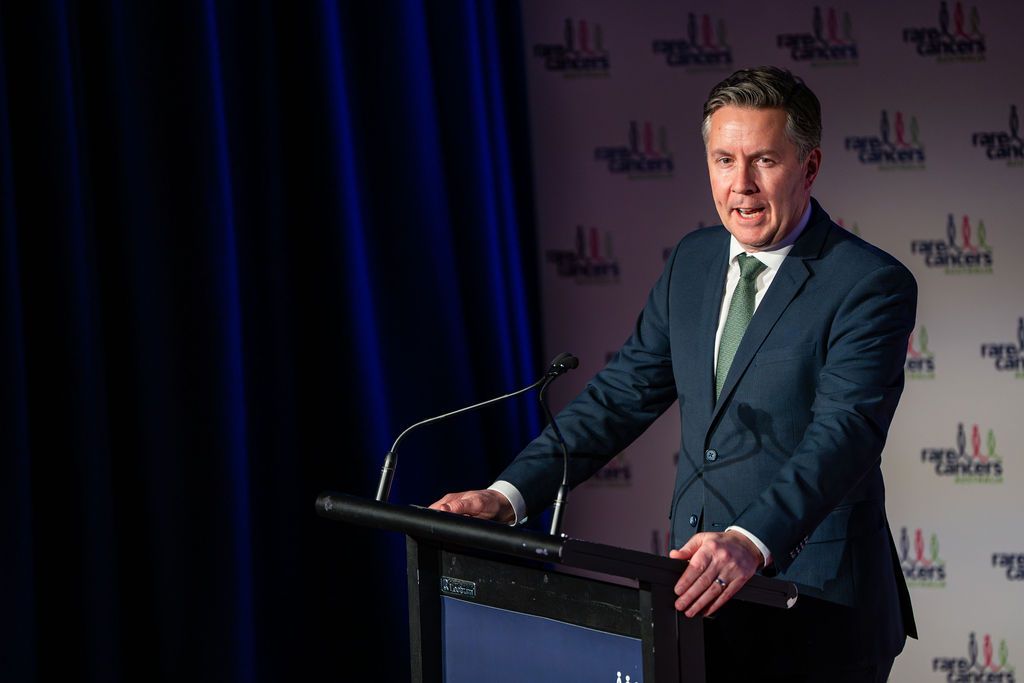
Minister Mark Butler speaking at CanForum 2024.
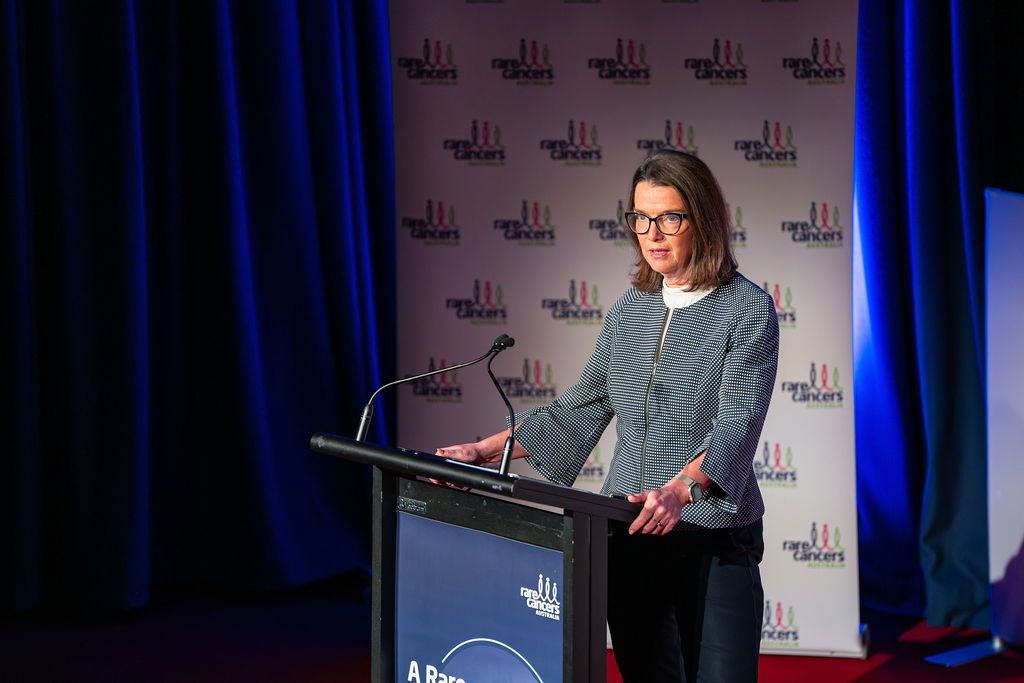
Shadow Minister for Health Anne Ruston speaking at CanForum 2024.
Data, though not exhaustive, shows there are significant disparities in cancer experience and outcomes between population groups in Australia.
Rare Cancers Australia highlights that Indigenous Australians face higher rates of rare cancers. From 2010 to 2019, the cancer death rate for Indigenous Australians increased by 12%, while it decreased by 10% for non-Indigenous Australians, widening the gap in survival rates.
The same can also be seen for different age groups. Canteen and others in the youth cancer space highlight that young people often have unique needs that often get overlooked as they transition from child to adult services. Even though childhood cancers are considered rare, they remain the leading cause of death for children in Australia.
To combat this, Ms Cockburn highlighted the work of the ZERO Childhood Cancer Initiative, which seeks to use advanced genomic analysis to guide diagnosis and treatment, and it’s now available to every child with cancer in Australia.
“Genomic-led cancer care is transforming our approach to cancer diagnosis and treatment. To keep this progress going, we need more support from both the government and the private sector,” said Cockburn.
“It’s essential to bring together experts in industry and healthcare and secure funding to advance precision medicine from research to real-world application. And, crucially, we need to work with and listen to different communities as we implement genomic services so that no one is left behind when it comes to cancer outcomes.”
While there is much work to be done to reach this Moonshot, Rare Cancers Australia and their leader believe there will never be a more opportune moment than now.
“A better world for rare to me absolutely looks like fairness and equity. It’s simply not fair that people who get unlucky cancers are left behind, that the system isn’t ready for them and that they face such inequity in experience and outcomes.”
“This can be addressed and after CanForum and all the support for the Moonshot Report, I believe more strongly than ever that it can be done.”