
Conferences cost a lot of budget and resources, but if you’re missing opportunities to maximise the impact, it could be costing you double.
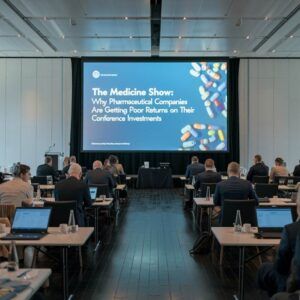
It happens like clockwork every year. For three days each year, Australia’s medical establishment decamps to various convention centres nationwide, where pharmaceutical companies spend vast sums to showcase their latest therapies. These gatherings, whether COSA, HTA or Blood, represent rare opportunities for the country’s relatively isolated healthcare system to plug into global medical advances. Yet, for many pharmaceutical companies, these expensive events are not clearly translating into a return on investment.
Companies spend millions of dollars on sponsorships, stands and symposia. Brand managers and medical directors view these expenditures as essential, much like their counterparts in America and Europe do for larger conferences. But whereas events in Boston or Barcelona can generate months of industry, Australia’s more modest gatherings often fade into obscurity once delegates head home.
This transience comes at a price. Most pharmaceutical companies measure success through immediate metrics: booth traffic, symposium attendance, and the quantity of business cards collected. These measures, while easily quantifiable, don’t capture meaningful impact.
Some firms are beginning to recognise this inefficiency. Progressive medical directors are treating conferences as platforms for sustained engagement. They coordinate with journalists to secure interviews with visiting luminaries for publications like The Australian Financial Review and specialist outlets such as Australian Doctor. These media placements serve a dual purpose: they extend the conference’s impact while positioning the company as a thought leader Australia’s healthcare dialogue.
Content creation is another overlooked opportunity. Conversations between international experts and local healthcare leaders often yield insights particularly relevant to Australia’s market. These could be captured and repurposed for everything from sales force education to patient advocacy. Yet most companies leave such intellectual capital on the convention floor.
Companies cannot afford to squander opportunities for differentiation. The challenge is not unique to Australia—pharmaceutical firms worldwide struggle to justify their marketing expenditures. However, the country’s geographic isolation and concentrated conference calendar make the issue more pressing.
Some companies have begun treating conferences as content engines. They arrange fireside chats between visiting experts and local key opinion leaders, creating material that can be adapted into various formats for different audiences. Others focus on identifying barriers to adoption and producing white papers that inform policy discussions long after the event ends.
However, for many pharmaceutical companies, old habits die hard. The industry’s tendency to measure what is easy rather than meaningful persists.
That mindset shift may be inevitable. As competition intensifies and marketing budgets face greater scrutiny, companies cannot afford to let their conference investments deliver half their potential value.
The question is not whether to attend Australia’s medical conferences but how to ensure they pay dividends long after the exhibition halls empty. Those who crack this puzzle will find themselves with a significant advantage only paying once for the privilege.
First published by London Agency: 28th January 2025